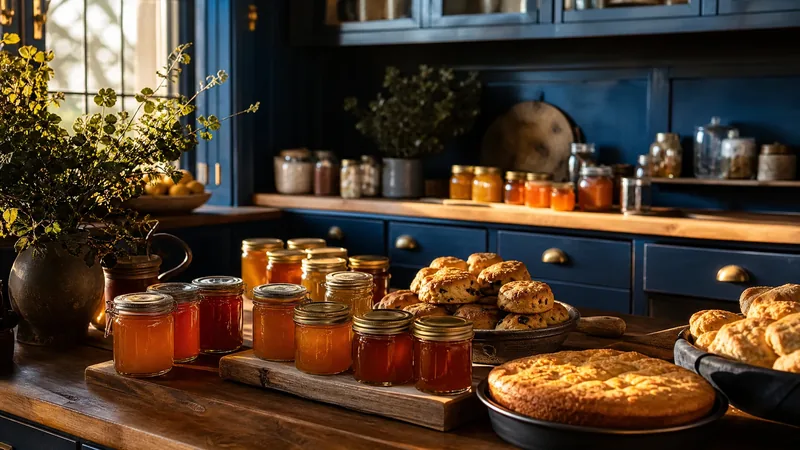
How to Start a Cottage Food Business in Maine: the $20 Home Food Processor License, Shelf-Stable Rules and Food Sovereignty Towns After the 2025 Home Kitchen Law
How to Start a Cottage Food Business in Maine: the $20 Home Food Processor License, Shelf-Stable Rules and Food Sovereignty Towns After the 2025 Home Kitchen Law
If you bake granola, biscotti, brownies or muffins and want to sell them, Maine is one of the simpler states to start in. The Department of Agriculture, Conservation and Forestry (DACF) issues a Home Food Processor License for $20 a year. It requires one initial inspection of your home kitchen and no annual inspection after that. The limit is the product list: the license covers shelf-stable foods only. Anything that needs refrigeration falls outside it.
This guide explains how to start a cottage food business in Maine, step by step. It covers how to confirm your product qualifies, how to apply, where you can sell, how labels work, when an entity filing makes sense, and how the 2025 food sovereignty law changes the picture for some towns.
Disclaimer: This article is informational content, not legal or tax advice. Rules, fees and agency procedures can change. Confirm every figure with the agency named before you spend money or make a commitment. For complex situations, such as multiple products, wholesale accounts or hiring employees, consult a qualified attorney and a CPA.
Step 1: Confirm Your Product Is Shelf-Stable
The license is built around shelf-stable food. Maine's DACF lists the following as examples of products that fall under the Home Food Processor License: bread, cookies, brownies, muffins, biscotti and granola. Start your planning here, because the product decides which license you need.
| Product type | Path under Maine rules | What to do next |
|---|---|---|
| Bread, cookies, brownies, muffins, biscotti, granola | Home Food Processor License ($20 a year) | Apply to DACF and schedule your kitchen inspection |
| Cream pies, custard pies, cheesecake, cream-filled items | Needs refrigeration, so a commercial license applies | Do not sell under the home license. Ask DACF about the commercial route. |
| Pickles, relishes, BBQ sauces | Acidified products must be reviewed before licensing | Send the recipe to UMaine Food Testing Services or another acidified-process authority first |
Common mistake: assuming a baked item is shelf-stable because it is baked. A cookie with a cream filling or a cake with a cream cheese layer may not qualify. If a recipe includes a cream, custard, cheese or fresh fruit filling, ask DACF before you list it for sale.
Step 2: Gather Your Materials
Before you call the state, assemble the documents and equipment you will need. This keeps the inspection and any follow-up questions short.
- Final written recipes with exact ingredient weights, not just volumes. Inspectors and agencies ask for these, and they keep your batches consistent.
- A production log recording the date, batch size, ingredient lot numbers where available, and who made each batch.
- A floor plan or description of your kitchen showing where you prepare, store and package food, and where pets, laundry and other household activity happen.
- Packaging that protects the product from moisture and pests. Plan for clean, sealed containers.
- Labels, if you will sell outside your home. You do not need them for direct sales from home, but you will need them for retail stores and other off-site sales.
- A business name decision. If you operate under your own legal name, no filing is needed for that. If you use a different name, see Step 6.
Step 3: Apply for the $20 Home Food Processor License
The Home Food Processor License is issued by DACF's Quality Assurance and Regulations group. Start at the DACF website at maine.gov/dacf and look for the home food processing license information and application.
- Read the current license guidance. Confirm your product list matches the shelf-stable categories above. Ask DACF directly about anything borderline.
- Submit the application and the $20 fee. The license is $20 a year. Keep your payment record and the license number.
- Schedule your one initial home-kitchen inspection. The inspector checks that your kitchen and storage meet the requirements. Clean the kitchen, clear the counters, and have your recipes and production log ready to show.
- Correct anything the inspector flags and keep a copy of the paperwork.
- Renew each year for $20. Your license does not require an annual inspection, but you must still renew it.
Ask DACF how long processing takes and whether the inspection can be scheduled before you buy packaging in bulk. Those timelines are not set out in this guide, so confirm them with the agency.
Step 4: Choose Where You Will Sell
The Home Food Processor License covers two sales channels:
- Direct sales from your home, such as customers picking up orders at your house. Labels are not required for these direct sales.
- Retail stores that stock your product. Labels are required for sales outside the home.
Farmers' markets, fairs and other off-site events are a separate matter. If you sell packaged food off site, you also need the $20 DACF Mobile Vendor License. Having the home license alone does not cover a market booth.
Common mistake: treating the home license as a general food permit. It covers the products and channels above. A café, catering operation or food truck runs under different rules, and the Health Inspection Program within the Maine Department of Health and Human Services licenses eating places. Ask that program before you serve food on site.
Step 5: Label Correctly and Describe Your Products Carefully
Labels matter most when a store or a stranger buys your product. Put your product name, ingredient list, net weight, and your business name and address on every package sold outside the home. Declare major food allergens, such as wheat, milk, eggs, peanuts and tree nuts, in the way the FDA's labeling guidance requires. Check the current FDA labeling guidance before you print anything, because the format rules are specific.
Your marketing copy also matters. Food labels and advertising should not claim that a product treats, cures or prevents a disease. Describe the product plainly, and use hedged language such as "may help support" only when you can back it up. Avoid absolute claims such as "guaranteed," "clinically proven" or "prevents illness."
Hedged language for product descriptions: "Made with whole oats and honey." "A snack that may fit a busy morning." "Baked in a home kitchen licensed by the Maine Department of Agriculture, Conservation and Forestry." Avoid anything that promises a health result.
Step 6: Decide Whether You Need a Filing
Maine has no general statewide business license, and no general town business license. Registering an entity or an assumed name is a filing, not a license. Your choice depends on how you operate.
Sole proprietor or general partner using a different name
If you sell under a name other than your own, file a sworn assumed-name certificate with the municipal clerk of the city or town where the business is carried on. Municipal fees are set by each city or town and are not published by the state, so ask the clerk for the amount.
LLC or corporation
An LLC is filed with the Maine Secretary of State, Bureau of Corporations, Elections and Commissions. The key facts are below.
| Item | Amount or requirement |
|---|---|
| Certificate of Formation (Form MLLC-6) | $175 filing fee under 31 MRSA 1531 |
| Name reservation (Form MLLC-1) | $20 for 120 days |
| Expedited handling | $50 for 24-hour service; $100 for immediate service, subject to staffing |
| Annual Report (Form MLLC-13) | $85, due June 1 each year. The first report is due between January 1 and June 1 of the year after formation. |
| Assumed name for an LLC (Form ASUM-5) | $125 filed with the Secretary of State |
| Registered agent | Required. Use a commercial agent or a noncommercial agent with a physical Maine street address, not a P.O. Box. |
Maine does not accept online filing of formation documents. Forms are fillable PDFs that you print and mail or deliver with payment. Annual reports can be filed through the online portal. Check current processing times with the Secretary of State before you plan a launch date.
Use the Secretary of State's business search at apps3.web.maine.gov/nei-sos-icrs/ICRS to confirm your name is free before you file. Forms and fees are on the Secretary of State's corporations and commissions page.
Step 7: Check Your Town for Local Rules
Maine's 482 organized municipalities, which include 23 cities, 430 towns and 29 plantations, license named activities by local ordinance. Counties do not license ordinary businesses. Fees and rules vary widely from one town to the next.
Call or visit your town or city office and ask three questions:
- Does the town require any local permit or registration for a home-based food business?
- Do the home occupation rules in the zoning ordinance limit customer traffic, signage, parking or employees?
- Has the town adopted a food sovereignty ordinance? See Step 9.
The Department of Economic and Community Development runs a free licensing assistant called Business Answers at maine.gov/businessanswers. It helps identify which activity-specific licenses and permits apply to your business.
Step 8: Understand Your Tax Obligations
Maine's general sales tax rate is 5.5%. Prepared food and on-premises liquor are taxed at 8%. Ask Maine Revenue Services which rate applies to your specific products, and whether you need a sales tax registration before your first sale. The Revenue Services website is at maine.gov/revenue.
If you form an LLC, Maine has no LLC franchise tax and no separate LLC annual tax. The only recurring state filing charge is the $85 annual report. An LLC is taxed by default as a pass-through, so members report income on their Maine individual income tax returns at rates from 5.8% to 7.15%. Ask a CPA whether electing corporate treatment makes sense for you. That election is taxed at 3.5% to 8.93% at the corporate level.
Keep separate bank accounts and records for the business from day one. Good records make the annual report, your sales tax filings and your income tax return easier.
Step 9: Consider the Food Sovereignty Route
Maine has a second path for some producers. Under 7 MRSA chapter 8-F, towns can adopt a food sovereignty ordinance. In a town with such an ordinance, direct producer-to-consumer sales can happen without a state license.
Public Law 2025, chapter 309, which took effect September 24, 2025, extends this approach to meals and food prepared in a home kitchen. That is a major change, but it applies only where a town has adopted an ordinance. It does not make every home food sale legal everywhere.
Keep these limits in mind:
- Meat and poultry are excluded under 7 MRSA 285.
- The ordinance is local. A town adopts it or it does not. Ask the town clerk whether your town has one and request a copy.
- Read the ordinance's exact terms on who may sell, what may be sold, where, and whether labeling or other conditions apply.
- Get written confirmation from the clerk if you plan to rely on the ordinance. Confirm any question about whether a product or sales channel is covered with the town and, where it matters, with an attorney.
For many home bakers, the state Home Food Processor License is the simpler route because it applies statewide. The ordinance route can make sense for direct sales in a town that has adopted it, especially for products the state license does not cover.
Common Mistakes to Avoid
- Selling refrigerated products under the home license. Cream pies, custard pies, cheesecake and cream-filled items need a commercial license.
- Selling pickles, relishes or BBQ sauces before review. Send these recipes for review by UMaine Food Testing Services or another acidified-process authority first.
- Forgetting the Mobile Vendor License. Farmers' markets and fairs require the $20 DACF Mobile Vendor License for packaged food sold off site.
- Skipping labels for retail stores. Labels are required for sales outside the home.
- Assuming a filing is a license. An LLC, a certificate of formation or an assumed-name certificate registers your business. It does not authorize you to sell food.
- Using disease or absolute health claims. Keep descriptions plain and hedged.
- Treating a state fee as the full cost. Town fees, packaging, insurance and sales tax registration all add to your startup costs.
- Starting without a written recipe. Inspectors and agencies expect written, weighed recipes and a production log.
Expected Results and What to Track
A Home Food Processor License can give you a legal way to sell shelf-stable baked goods and granola from home and through retail stores. It does not guarantee sales volume, and results depend on your product, pricing, location and marketing. Treat the first year as a test: track sales by channel, track your costs per batch, and note which products sell without repeat effort.
When you describe results to customers, keep the same discipline you use on labels. Say what you made and where it is sold. Avoid promises about health, sales or outcomes.
Your Startup Checklist
- Confirm each product is shelf-stable, or ask DACF about the commercial route.
- Send acidified products for review before you apply for licensing.
- Write weighed recipes and start a production log.
- Apply to DACF for the $20 Home Food Processor License and schedule your kitchen inspection.
- Print labels for any retail or other off-site sales.
- Get the $20 DACF Mobile Vendor License before any farmers' market or fair sale.
- Ask your town clerk about local permits, zoning and any food sovereignty ordinance.
- Decide whether you need an assumed-name certificate or an LLC, and confirm fees with the agency.
- Ask Maine Revenue Services which sales tax rate applies and whether you must register.
- Talk with a CPA and, for complex situations, an attorney before you commit.
Disclaimer: This article is informational content, not legal or tax advice. Verify all fees, deadlines and requirements with the Department of Agriculture, Conservation and Forestry, the Secretary of State, Maine Revenue Services and your municipal office before you act.
Keep exploring: related Maine guides
- How to Start a Coffee Shop Business in Maine
- How to Start a Food Truck in Maine
- How to Start a Catering Business in Maine
- How to Start a Brewery, Distillery, Winery or Cidery in Maine
- How to Start an LLC in Maine
- Maine Business License
- How Much Does It Cost to Start a Business in Maine
- All Maine business types
- Every Maine guide in one place